Tourist Information
BackTourist Info at Kanalvejen 2 in Løgstør functions as a compact, local hub for travelers who want a quick overview of the options in the area and along the Limfjord. Although the place is officially registered as a travel agent, in practice it functions more like a classic tourist office with a focus on information, inspiration and help with planning rather than selling actual package tours. For potential guests, this means that you find a place to start your trip here, but not necessarily a fully-fledged commercial travel partner.
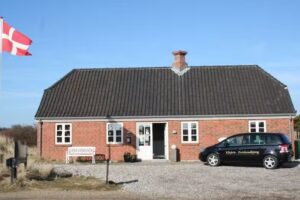
The entrance to the Tourist Info is easy to spot, and several visitors highlight that it is easy to locate the place without having to look for a long time. The central location makes it a natural stop for both first-time visitors and returning guests who want updated knowledge about activities and attractions. The impression is that accessibility and visibility have been thought through, which is crucial for an operator that wants to attract both spontaneous visitors and more planning-oriented tourists.
Inside the information area itself, you will find classic shelving with brochures, leaflets and maps. Here you can find printed material about both Løgstør and the surrounding Himmerland, including experiences along the Limfjord, nature tours, cultural events and family-friendly activities. Overall, it gives the impression of a place where analogue information still plays an important role, which is an advantage for guests who appreciate physical materials for their trip planning.
For travelers accustomed to digital solutions, Tourist Info can complement online searches by providing a more curated overview. Where online information can often be fragmented, this place offers a unified gateway to local experiences. This is especially valuable for visitors who need quick advice to prioritize which attractions best match their schedule, budget, and interests.
Although Tourist Info is registered as part of a travel agency and information structure, it is clear that the focus is on guidance rather than direct sales of travel products. You will especially get help finding local attractions, hiking trails, events and cultural offers rather than complex travel packages or tailor-made international itineraries. For the visitor looking for a classic commercial travel partner, this may be experienced as a limitation, while the independent traveler will experience it as flexible support for their own planning.
A significant plus of Tourist Info is the wide range of topics covered in the material available. There is information on nature, culture, events, museums, local eateries and seasonal activities. At the same time, it is emphasized that visitors can get inspiration for both short day trips and longer stays in the region, making the place relevant to different types of guests – from campers and cyclists to families in cars.
When looking at Tourist Info as a player in local tourism, it makes sense to relate it to classic keywords such as travel agency, travel service and tourist office . In practice, the site primarily functions as an information-driven tourist office, where the goal is to enhance the guest's experience of the area rather than selling ready-made travel packages. For users looking for a locally anchored entry to the area, this is a strength, while the price- or package-focused customer may miss the more comprehensive services associated with an online travel agency .
Experienced travelers often want to combine digital solutions with personal assistance, and here Tourist Info can contribute as a physical supplement to online searches on, for example, online travel agencies or cheap travel . This is not where you typically find the lowest package tour prices or complex international itineraries, but rather local knowledge that can refine a trip that has already been booked elsewhere. This role as a quality enhancer of an existing itinerary can be crucial for guests who want to get the most out of their stay.
Visitors describe Tourist Info as clear and easy to access, precisely because the offer is so focused on the area around Limfjorden and Himmerland. You experience a place where you can quickly spot the most relevant brochures without being overwhelmed by globally oriented material. This makes the place suitable for travelers who are already in the region and are looking for concrete suggestions for what to spend the next day or weekend on.
Physical images and impressions from the site show a well-thought-out presentation of the material, where shelves and racks are arranged so that the central themes – nature, culture, activities – are easy to decode. For potential customers who value order and structure, this is a positive detail, as it signals professionalism and consideration for the guest’s time. This form of visual organization is well suited to an information point that wants to appear as a safe first stop in planning.
On the other hand, as a customer you can also expect certain limitations in the level of service. With few registered reviews and a relatively narrow focus area, it is not a place where you can count on deep specialization in complex trips, for example longer overseas stays, tailored business trips or advanced combination trips. Here a larger, national or international travel agency will typically be a better match, while Tourist Info is strongest when it comes to local knowledge and concrete inspirations in the local area.
For customers searching for terms like local travel agency , tourist information or travel information Limfjorden , Tourist Info will be a natural match because the focus is on creating contact between the guest and the many small and medium-sized places of experience in the region. This can be everything from museums and local history attractions to nature trails, boat trips, events and seasonal activities. This role as a link between visitors and local actors is a key plus when assessing the value of the place for tourists.
Another strength is that Tourist Info is typically linked to a wider digital universe, where additional information about events, calendar functions, route ideas and thematic experience packages can be obtained via the overall destination platform. Although not all guests will want to delve into the digital layer, it provides extra security to know that the physical information is supported by updated online data. This makes it easier to combine spontaneous visits to the information point with ongoing updates on the mobile phone.
However, it should be noted that a place like Tourist Info does not necessarily have the same commercial flexibility as a private travel agency. There are often fixed information formats, and the employees work within a framework that is primarily about communicating and making visible, not about entering into price negotiations, special agreements or individual contracts. For the customer who expects aggressive price optimization and tailored solutions in the same way as with a large online platform, this can seem like a limitation.
On the other hand, the local anchoring can provide a form of proximity and credibility that larger players cannot always match. When you walk through the door, you are met with a physical setting that signals that the focus is on experiences in this particular area, and that the information you receive is based on concrete knowledge rather than generic descriptions. For many guests, it is precisely this kind of place-specific knowledge that makes the difference between a standardized holiday and a more personalized stay.
For potential customers looking for travel information for a holiday in and around the Limfjord, Tourist Info is therefore most relevant as a supplement to the digital options. You can use search terms such as tourist office Limfjord , holiday in North Jutland or local travel information to find further knowledge, but the visitor situation itself in Tourist Info makes it easier to ask clarifying questions and get recommendations that take into account weather, season and individual preferences.
Overall, Tourist Info appears to be a serious but relatively simple offering for guests who want to get a handle on the possibilities in the area without having to go through a lengthy booking process. The strengths lie in the clear access to local material, the central location and focus on concrete activities and experiences. The weaknesses primarily become apparent if you expect a full-service travel agency with global package tours, 24/7 customer service and advanced digital tools.
For a large proportion of travellers, the most appropriate use will be to combine Tourist Info with other players. For example, you could use an online travel agency for transport and accommodation, and then use Tourist Info to refine the program with local suggestions for experiences. In this way, the strengths of both types of players are exploited, and you get both price optimization and locally anchored content.
For potential guests considering a visit, the realistic expectation is therefore that Tourist Info is a place where one gets concrete, locally focused recommendations, printed materials and a quick overview of what is worth experiencing in the area. Those seeking in-depth commercial advice and international solutions will typically supplement with other services, while the curious tourist already on site can gain great value from a short, targeted visit to the information area.